The Buyer's Guide
Spray Foam Training & Certification: Where to Start
Manufacturer certification, SPFA resources, and hands-on training options — what a realistic path into this trade actually looks like.
There's no single universal license required to spray foam nationwide, which makes the training and certification landscape genuinely confusing for someone starting out. This page covers the real, practical paths — manufacturer certification, SPFA resources, and hands-on training — rather than implying there's one official credential everyone needs.
Manufacturer Certification Is Often the Practical Starting Point
Many chemical manufacturers and their distributors offer product-specific training and certification tied to the equipment and chemistry they sell — covering correct application technique, ratio awareness, and safety practices specific to that product line. This is frequently the most accessible entry point for a new operator, since it's often bundled with or available through the same relationship you're already building with an equipment or chemical supplier.
The Spray Polyurethane Foam Alliance (SPFA)
SPFA is the industry's professional association, and offers accreditation programs, technical resources, and professional certification pathways that carry credibility across the industry rather than being tied to one manufacturer's product line. SPFA credentials can matter for larger commercial jobs, some code-compliance contexts, and building general industry credibility beyond what a single manufacturer's certification demonstrates.
Hands-On Training Is Genuinely Different From Classroom or Online Certification
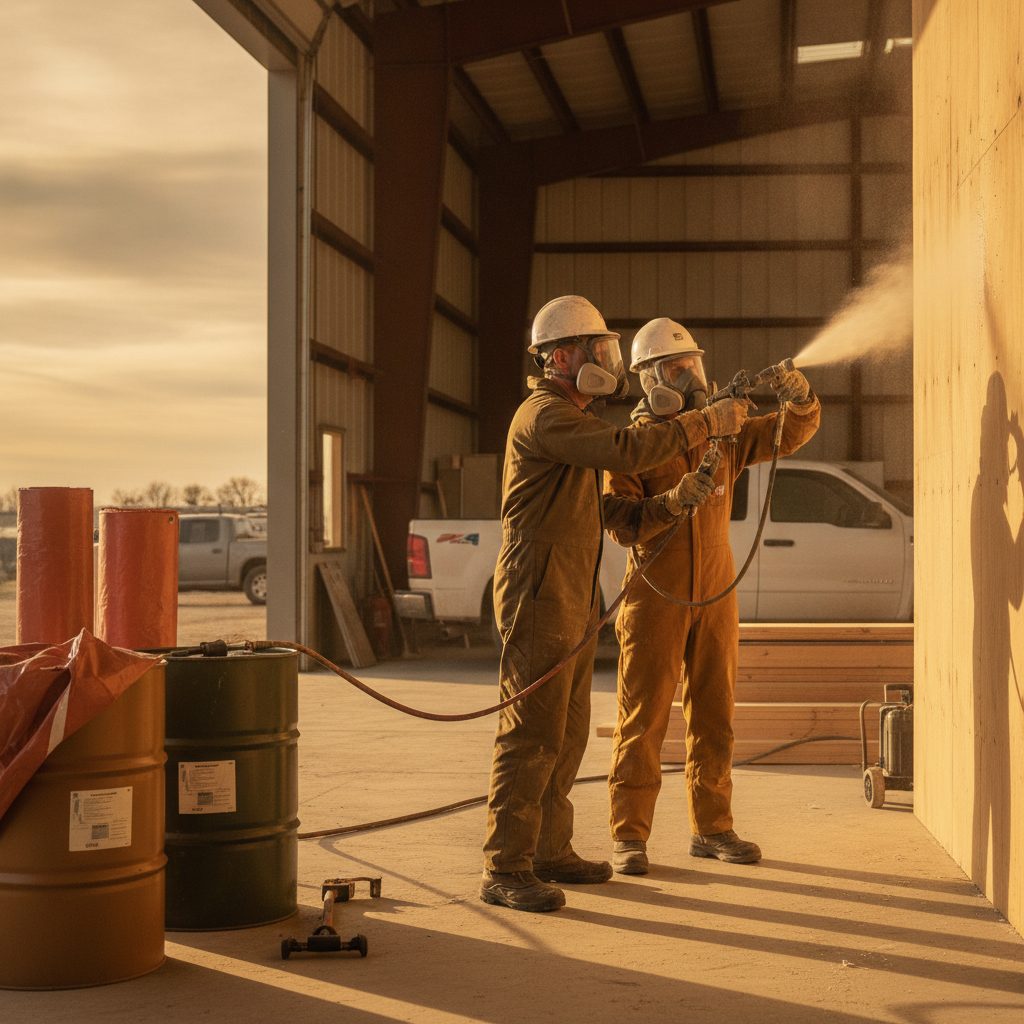
Correct spray-gun technique — distance, angle, pass speed, overlap — is a physical, practiced skill that classroom or online certification alone doesn't teach. Real hands-on training, whether through a manufacturer's in-person program, an experienced mentor, or working alongside an established crew before going independent, is a genuinely different and complementary requirement to formal certification, not a redundant extra step.
State and Local Licensing Requirements Vary and Need Separate Research
Beyond industry certification, state and local contractor licensing requirements for insulation or spray foam work vary significantly by jurisdiction, and are a separate research task from manufacturer or SPFA certification. Checking your specific state and local requirements directly — rather than assuming a national standard exists — is a necessary, easy-to-skip step.
A Realistic Sequencing for Someone Starting Out
A practical path for most new operators: research state/local licensing requirements first (since this can affect timeline and cost), pursue manufacturer certification tied to the equipment and chemistry you're planning to use, get genuine hands-on practice before working unsupervised, and consider SPFA accreditation as the business grows and commercial opportunities that value that credential come up. Skipping straight to buying equipment before understanding this sequence is a common, avoidable mistake.
Key Takeaways
- There's no single universal national license — manufacturer certification, SPFA accreditation, and state/local licensing are separate, complementary pieces.
- Manufacturer certification is often the most accessible starting point, frequently bundled with equipment or chemical supplier relationships.
- SPFA accreditation offers industry-wide credibility beyond any single manufacturer's product-specific certification.
- Hands-on practice is genuinely distinct from classroom/online certification — spray-gun technique is a physical skill that has to be practiced, not just studied.
Common Questions
Training & Certification FAQs
Real questions people ask before buying equipment or starting out.
Related Topics
Choosing a Spray Foam Rig: Trailer vs. Truck-Mount
The real tradeoffs between a trailer rig and a truck-mounted rig — mobility, cost, maintenance access, and resale — for a new or growing spray foam operation.
Read moreSpray Foam Proportioner Buying Guide
What actually separates proportioner classes and price tiers — ratio-control precision, output rate, and serviceability — before you commit to equipment.
Read moreWhat It Actually Costs to Start a Spray Foam Business
A realistic, itemized look at rig cost, chemical costs, PPE, training, and working capital — the numbers most "how to start" content skips.
Read more
Ready to Talk Through Your Plans?
Whether you're just exploring or ready to buy a rig, talk to Contractors Choice Agency — free, no obligation, and grounded in real contractor experience.