The Buyer's Guide
Spray Foam Chemical Suppliers: What to Know Before You Buy
How the major manufacturer/distributor landscape actually works — direct vs. distributor purchasing, minimum orders, and what changes as you scale.
Most new operators assume they'll buy chemicals directly from a manufacturer like BASF, Huntsman/Icynene-Lapolla, Carlisle, or similar. In practice, most contractors — especially at smaller volumes — buy through a regional distributor instead. Understanding how that actually works before your first order saves real confusion and cost.
Manufacturer vs. Distributor: What Actually Changes
Manufacturers generally sell at volumes and terms structured for larger operations or through their own distributor networks rather than direct small-account relationships. Regional distributors — who purchase from manufacturers at scale and resell in smaller quantities — are the practical entry point for most new and smaller operators, and often also carry equipment, parts, and technical support alongside the chemicals themselves.
Minimum Order Quantities and What They Mean for Your Cash Flow
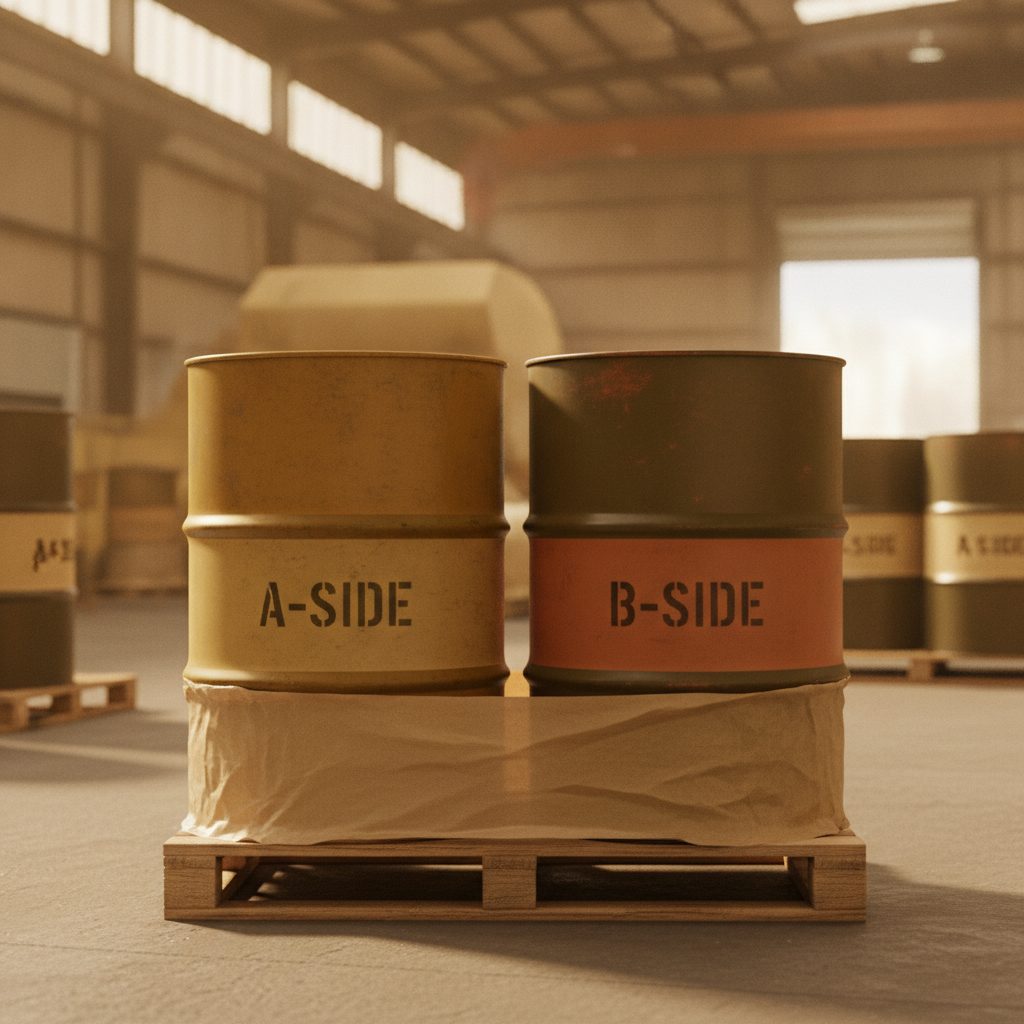
Most distributors have minimum order quantities, since two-component spray foam systems are shipped and stored as matched sets (A-side and B-side drums or totes together). A new operator needs to plan cash flow around that minimum order size, not around exactly how much a single job actually consumes — you're generally financing a chemical inventory buffer, not buying chemical job-by-job.
Storage and Shelf-Life Realities
Spray foam chemical components have real shelf-life and storage-temperature requirements — both components can degrade or become unusable if stored improperly or held too long before use. A new operator's chemical purchasing plan needs to account for realistic job volume so inventory actually gets used within its shelf life, rather than over-ordering to hit a distributor discount tier and then losing product to expiration.
Technical Support Is a Real Differentiator Between Suppliers
Beyond price, a distributor's willingness to provide real technical support — troubleshooting an off-ratio complaint, helping with product selection for an unusual assembly, standing behind a batch issue — varies meaningfully between suppliers. For a new operator without years of chemistry experience to fall back on, that support relationship is often worth more than a marginally better per-unit price, particularly in the first year or two while building that experience directly.
Building a Relationship With More Than One Supplier
Relying on a single supplier creates real business risk if that supplier has a supply disruption, price spike, or service issue. Many established operators maintain a working relationship with at least a backup supplier, even if they primarily buy from one — a reasonable practice to build toward as the business grows past its first year, rather than something a brand-new operator necessarily needs to set up day one.
Key Takeaways
- Most contractors buy through regional distributors, not directly from manufacturers — distributors are the practical entry point at smaller volumes.
- Minimum order quantities mean you're financing a chemical inventory buffer, not buying job-by-job — plan cash flow accordingly.
- Real shelf-life and storage-temperature limits mean over-ordering to hit a discount tier can cost you product to expiration.
- A distributor's technical support quality is a real differentiator worth weighing against price, especially for a new operator's first year or two.
Common Questions
Chemical Suppliers 101 FAQs
Real questions people ask before buying equipment or starting out.
Related Topics
Choosing a Spray Foam Rig: Trailer vs. Truck-Mount
The real tradeoffs between a trailer rig and a truck-mounted rig — mobility, cost, maintenance access, and resale — for a new or growing spray foam operation.
Read moreSpray Foam Proportioner Buying Guide
What actually separates proportioner classes and price tiers — ratio-control precision, output rate, and serviceability — before you commit to equipment.
Read moreWhat It Actually Costs to Start a Spray Foam Business
A realistic, itemized look at rig cost, chemical costs, PPE, training, and working capital — the numbers most "how to start" content skips.
Read more
Ready to Talk Through Your Plans?
Whether you're just exploring or ready to buy a rig, talk to Contractors Choice Agency — free, no obligation, and grounded in real contractor experience.