Proportioner Brands: What Actually Differs Between Them
Ask around in spray foam forums or at a distributor's counter which proportioner brand to buy, and you'll get strong opinions fast — usually rooted in whichever brand the person already owns. This isn't a ranked list. It's an honest breakdown of what actually differs between the major brands functionally, so you can weigh it against your own situation instead of someone else's.
They Solve the Same Core Problem Differently
Every proportioner brand exists to solve the same problem: pump and heat two chemical components and deliver them to the gun at a precise, matched ratio. Where brands genuinely differ is in pump design, heating system approach, control interface (mechanical gauges vs. electronic monitoring), and physical build for durability and serviceability. None of the major brands are "bad" — they've all been in commercial use long enough to prove the core engineering works. The differences that matter are more specific than brand loyalty suggests.
Control Interface Is the Biggest Functional Difference
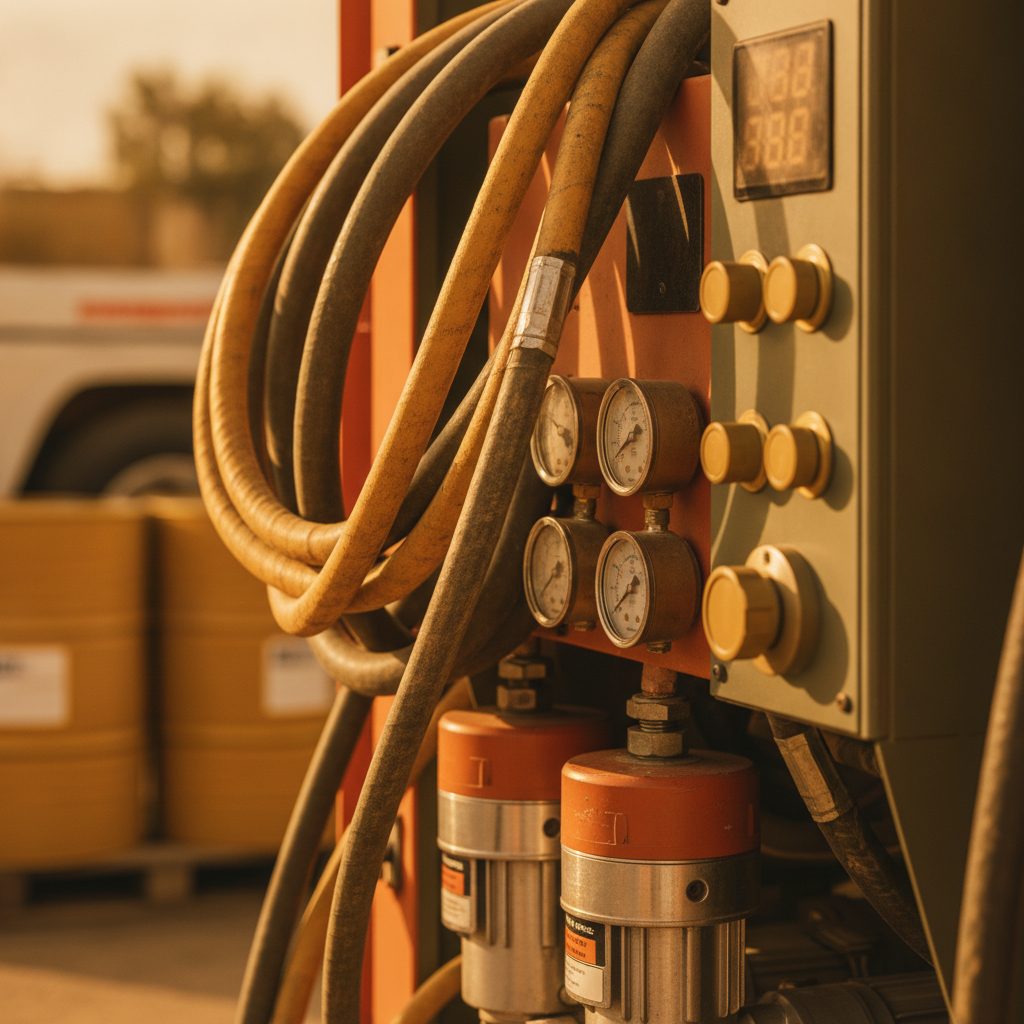
The clearest dividing line across brands and product tiers isn't the brand name itself — it's whether a specific model relies primarily on the operator reading mechanical gauges and reacting to drift, or includes electronic ratio monitoring that actively tracks and corrects imbalance. This distinction cuts across brands; each major manufacturer offers models at different points on that spectrum, so "which brand" is a less useful question than "which specific model's control approach fits my crew's experience level."
Parts and Service Network Varies by Region, Not Just Brand
A proportioner's real-world reliability isn't only about the machine — it's about how fast you can get it running again when something breaks. Regional distributor density and service-technician availability for a specific brand vary a lot by geography. A brand with excellent national reputation but no service tech within a reasonable drive of your business is a real practical liability that a spec-sheet comparison won't surface. Before choosing a brand, it's worth calling your regional distributors directly and asking honestly how fast they can get you parts or a technician if something breaks mid-season.
Used Market Depth Differs by Brand and Age
Some brands have a deeper, more liquid used-equipment market than others, which matters both for buying in at a lower price point and for resale value later. A brand with strong used-market depth gives you more flexibility on both ends — an easier entry purchase and an easier exit if you ever need to sell.
The Honest Bottom Line
There isn't a single correct brand answer, and any resource telling you there is has probably not accounted for your specific regional service access, budget, and job mix. The better question than "which brand" is: which specific model's output rate matches my realistic job volume, which control interface matches my crew's experience level, and which brand has real service support in my actual region. Answer those three questions honestly and the brand choice mostly falls out on its own.
Read the full proportioner buying guide, or talk to CCA about your specific situation.